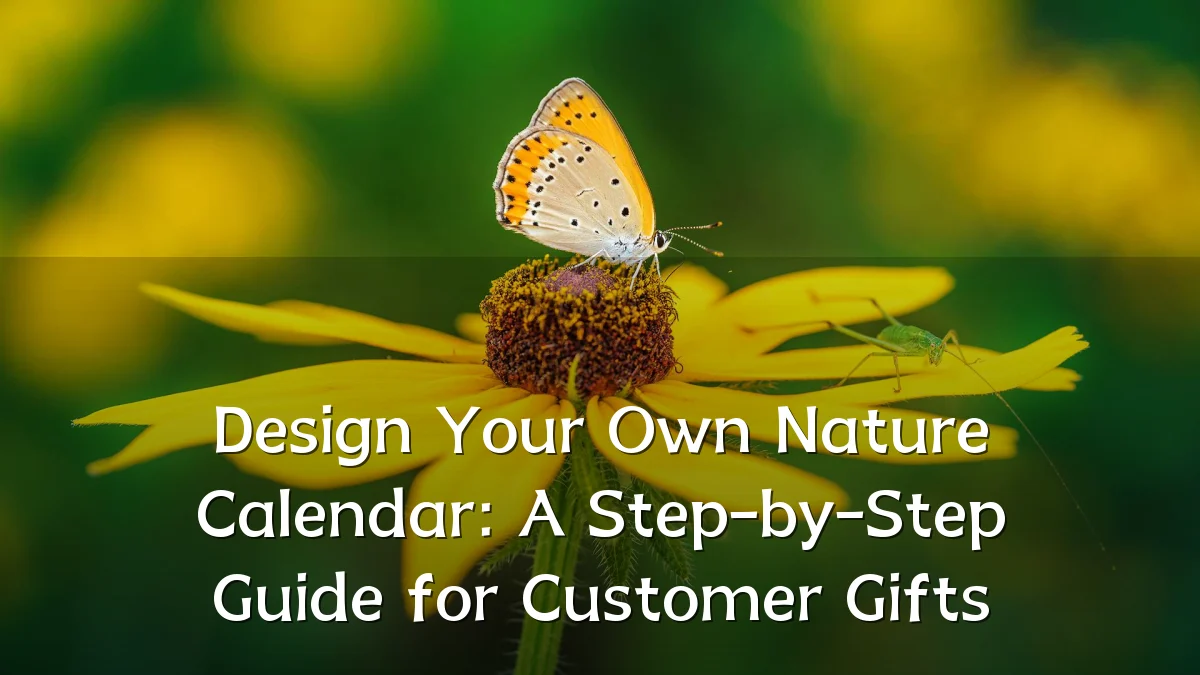
Design Your Own Nature Calendar: A Step-by-Step Guide for Customer Gifts
Recent Trends in Client Gifting and Nature-Themed Calendars
Businesses have increasingly moved away from generic promotional calendars in favor of branded items that reflect shared values. Nature-themed calendars have gained traction as recipients seek visual respite from screen-heavy workdays. Recent surveys indicate that more than half of small-to-medium enterprises now prefer gifts with an environmental or wellness angle. Meanwhile, custom-print services report a double-digit rise in orders for nature-scene calendars, particularly those that can be personalized with company logos and seasonal notes.

Background: Why a Nature Calendar Appeals to Recipients
The tradition of corporate calendar giveaways is decades old, but the rationale has shifted. Rather than simply providing a date tracker, a nature calendar offers emotional resonance—images of landscapes, flora, or wildlife can reduce stress and be displayed in both home offices and communal break rooms. Unlike branded desk accessories that often go unused, a well-designed nature calendar remains visible and functional for an entire year, offering repeated brand exposure without feeling intrusive.

- Low-cost, high-perception value: Printed calendars remain one of the most budget-friendly corporate gifts per impression.
- Versatile distribution: Suitable for mail-outs, in-person client visits, or as part of a seasonal thank-you package.
- Alignment with sustainability messaging: Many companies choose calendars printed on recycled paper or in partnership with conservation organizations.
User Concerns When Designing a Custom Nature Calendar
Clients and procurement managers often raise several practical issues before committing to a custom order. Understanding these concerns helps ensure the calendar is both appreciated and used.
- Image quality and rights: Using professional, royalty-free or licensed nature photography is essential. Blurry or low-resolution images diminish the gift’s value.
- Seasonal relevance: A calendar heavy on winter scenes may feel out of place if delivered in late spring, so choosing regionally appropriate or diverse ecosystems is safer.
- Brand prominence: Overly large logos can feel like advertising; subtle placement (e.g., on the back cover or within the grid) tends to be better received.
- Print timelines and proofing: Clients worry about delays; ordering samples and scheduling proof approvals four to six weeks before distribution avoids last-minute problems.
Likely Impact on Brand Engagement and Recipient Retention
When executed well, a custom nature calendar can strengthen customer relationships in measurable ways. Recipients who appreciate the design are more likely to keep the calendar visible, which in turn maintains top-of-mind awareness for the company. Some businesses layer a secondary benefit by including discount codes or QR codes on each month’s page that lead to seasonal product recommendations or sustainability content. While no single gift guarantees loyalty, a thoughtful calendar can contribute to a positive annual touchpoint that competitors’ generic items lack.
“A calendar that actually gets hung on a wall is worth more than a dozen branded pens in a drawer.” — common sentiment among corporate gift buyers.
What to Watch Next in the Nature-Calendar Gift Space
Several developments may affect how businesses approach this gift in the coming year. Design tools are becoming more accessible, allowing non-specialist staff to assemble a layout in minutes. Yet the risk of oversimplified, boilerplate results may push discerning companies toward boutique illustrators or photographers. Meanwhile, hybrid calendars—combining a printed wall version with a digital companion—are emerging as a way to extend utility beyond the year. Companies should also monitor postal regulations for calendar sizes and sustainability certification requirements if they wish to highlight eco-friendly credentials.
- Personalization at scale: Variable-data printing now allows different images or messaging per client segment.
- Eco-certification labeling: FSC-certified paper and soy-based inks can be a differentiator in a crowded market.
- Cultural sensitivity: Avoid stereotypical or outdated depictions of nature; opt for authentic, locally sourced imagery when feasible.